
Kigambira Safari Lodge is a luxury eco-lodge in the southern part of Lake Mburo National Park. Kigambira Safari Lodge lies about 36 kilometres from the Kampala–Mbarara highway. The road continues through the park towards the lodge. The lodge opened in 2020 and operates as a small safari property with around 20 beds. The lodge takes its name from Lake Kigambira which lies close to the property. The property sits between Lake Kigambira and Rubanga Forest. This gives guests access to lake, forest and savannah environments within the wider Lake Mburo ecosystem. Lake Kigambira attracts birds and other wildlife while Rubanga Forest provides a different habitat from the open grasslands. The area around Lake Mburo is known for zebra, impala, eland, buffalo, waterbuck and other wildlife. The park also supports a large number of bird species.
Accommodation
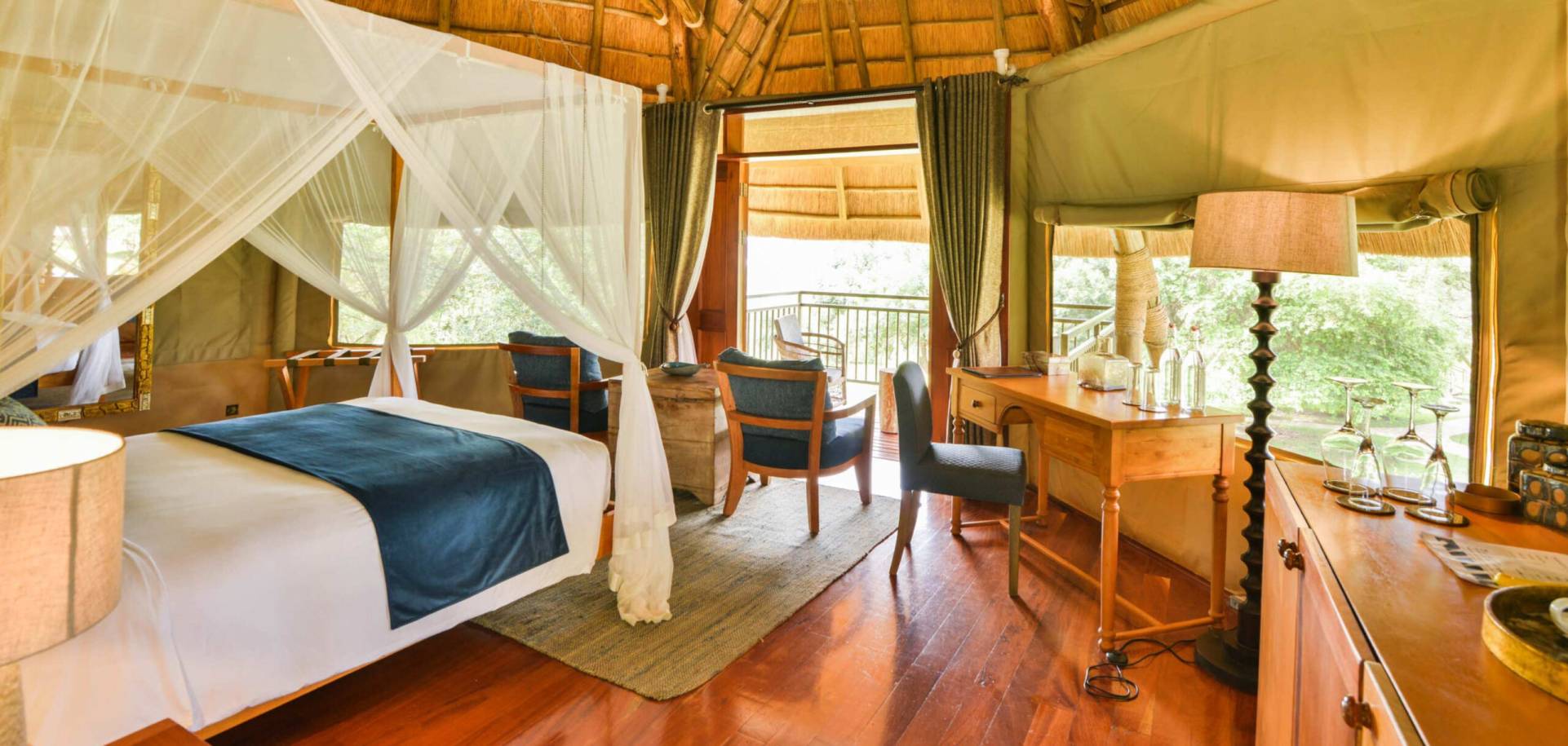
Kigambira Safari Lodge has 12 en-suite bandas. The accommodation includes nine deluxe bandas, two family bandas and a honeymoon suite. The bandas are designed as separate units rather than one large accommodation block. The rooms have private outdoor spaces facing Lake Kigambira and the surrounding vegetation. The family bandas provide more space for guests travelling together. The lodge also provides facilities such as mosquito nets and private bathrooms.
Facilities and dining
The lodge has a main building containing the restaurant, bar, library and other guest areas. The restaurant serves breakfast, lunch and dinner. The lodge also provides picnic lunches for guests spending most of the day in the park. Special dietary requirements can be arranged when requested in advance.
Other facilities include Swimming pool, Wi-Fi, Laundry service, Parking, Gym, Sauna, Massage services, Gift shop, Library and gallery. The lodge also uses solar power and other measures aimed at reducing its environmental impact.
Activities offered by Kigambira Safari Lodge
Game drives
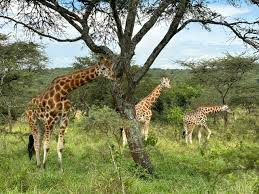
Nubian giraffes
Game drives take place inside Lake Mburo National Park. Guests travel in a safari vehicle with a guide who follows the park’s established tracks. Morning drives can focus on animals active during the cooler hours. Afternoon drives provide another opportunity to explore the savannah. Visitors may see zebra, impala, buffalo, waterbuck, warthog, topi and other wildlife. Larger predators occur in the park but sightings depend on location and season.
Night game drives
Kigambira can arrange night game drives. Visitors travel after dark with an appropriate guide and lighting equipment. The focus changes from daytime animals to nocturnal species. Warthogs, hyenas and other night-active animals may appear along the tracks. Leopard sightings are possible but not guaranteed.
Boat trips
Boat trips take place on Lake Mburo. Visitors travel by boat along the shoreline while looking for hippos, crocodiles and water birds. The guide explains the animals and vegetation around the lake. Morning and afternoon trips can be arranged depending on availability.
Nature walks
Guided nature walks take visitors along trails within the Lake Mburo area. The walks focus on smaller wildlife, plants, insects and birds. A ranger or guide leads the walk and explains the surroundings. Visitors should follow instructions because wild animals can occur along the trails.
Hiking
The lodge can arrange hikes through the low-canopy forest and along trails around Lake Kigambira. The walks vary in length and difficulty. The lake loop provides views of the water, vegetation and birdlife. Longer walks require more time and physical effort.
Bird watching
Bird watching can be done around Lake Kigambira, Rubanga Forest and other parts of Lake Mburo. Visitors usually go out with a guide carrying binoculars and a bird list. The guide helps identify birds through their calls, colours and behaviour. Some of the birds that can be spotted include African finfoot, papyrus gonolek, blue-headed coucal, shoebill stork, Bare-faced go-away-bird, red-faced barbet, crested francolin and the black-bellied bustard,Ross’s turaco, lilac-breasted roller and various kingfishers.
Bush breakfast
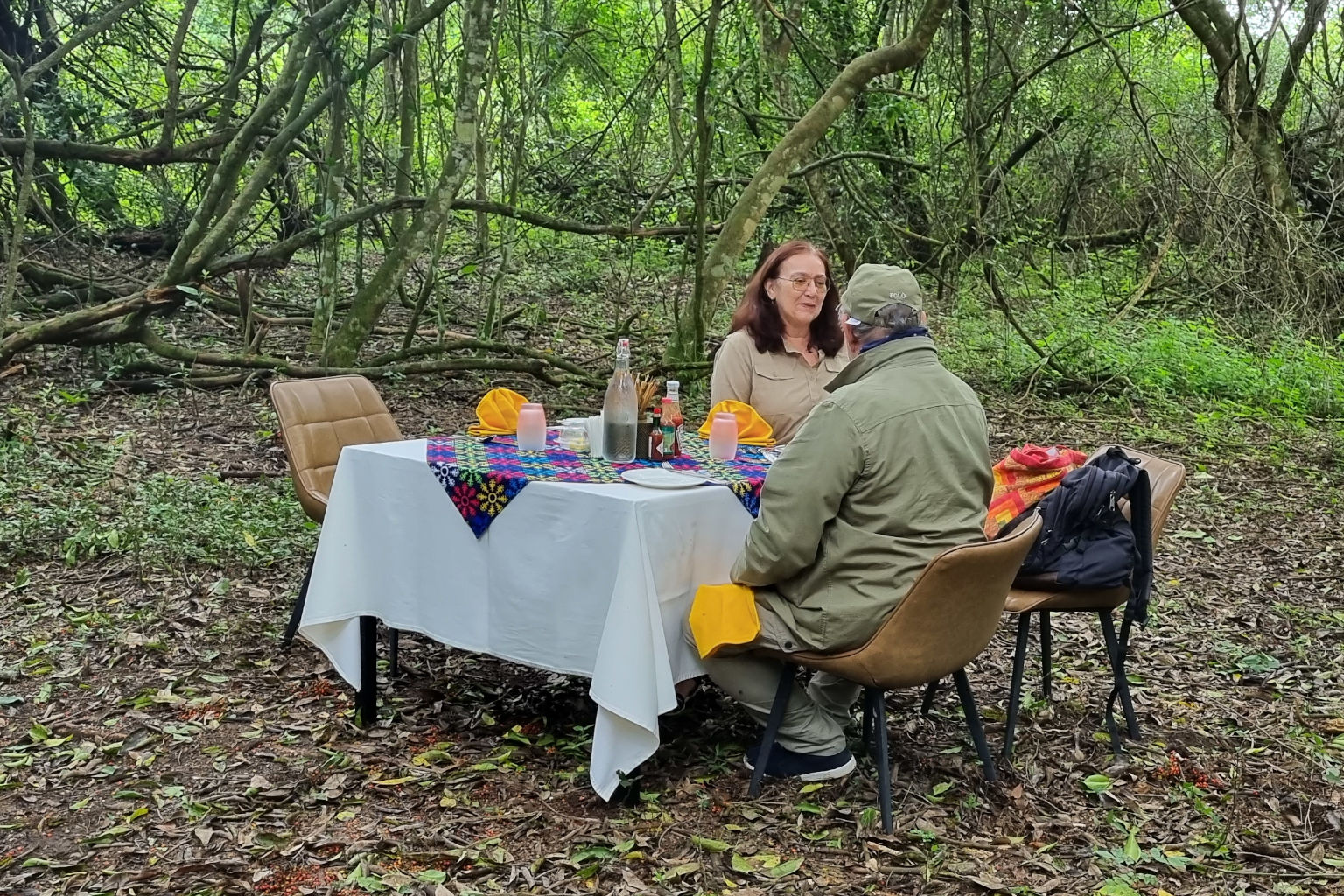
Kigambira also offers bush breakfast arrangements. Guests leave the lodge for a selected location in the park. Breakfast is served outdoors after or during a morning safari. The location depends on park rules, weather and the safari programme.
Cultural visits
Visitors can meet communities around Lake Mburo and learn about local livelihoods. The activities can include visits to cattle-keeping communities and demonstrations of traditional practices. These experiences help explain the relationship between local communities, livestock and the protected area.
Community and conservation
Kigambira has supported community programmes around the Lake Mburo area. One documented example involved the lodge supporting school fees for four girls who participated in a conservation-related marathon. The lodge also promotes local sourcing for its food. This creates a market for produce supplied by farmers around the area. Its location inside the Lake Mburo ecosystem also means that tourism depends on protecting the surrounding wildlife and habitats.
How to access Kigambira Safari Lodge
From Kampala, Lake Mburo is normally reached through Masaka and Mbarara. Kigambira requires an additional drive from the main highway into the park. The road journey from Kampala generally takes about 4–5 hours depending on traffic, road conditions and stops. Travellers heading towards Bwindi can continue through Mbarara, Ntungamo and Kabale. Those travelling towards Queen Elizabeth can continue through Mbarara and Bushenyi.